Garage Door Off Track Repair in Cumberland, MD
A derailed door is braced, eased back onto its rails, and hung again on true track with sound rollers, and the cause of the derailment is fixed so it stays put.
Rollers outside the rail, a door sitting crooked or wedged, or a panel bowed where it caught: that is an off-track door in the Cumberland area. Stop using it and keep the opener switched off until someone has looked.
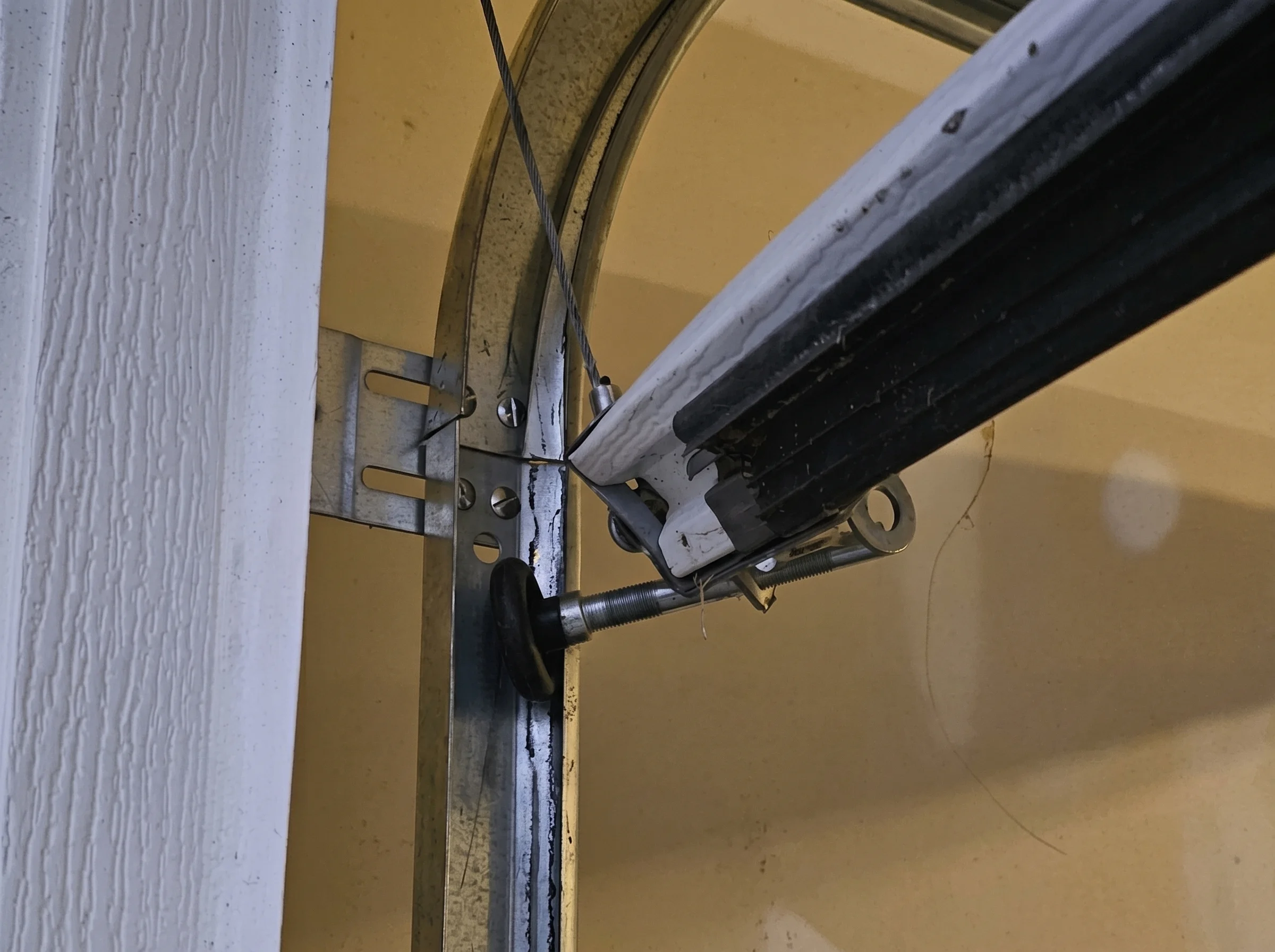
How to recognize a derailed door
A roller or two outside the rail, usually low on the door or at the bend where the track turns toward the ceiling, so the door looks out of true.
The door cocked or jammed, often stuck part of the way up.
A buckled or creased panel, left where the opener kept shoving a snagged door.
Bent, dented or loosened rail, pulled away from the wall in spots.
Grinding, scraping or popping heard in the seconds before it let go.
Door off its rail? Keep the opener off and describe which side came out and the events before it.
Contact UsUsual reasons a door derails
A bumper strike
Backing into a shut or half-open door causes the most derailments, and it typically bends the bottom end of the rail too.
A cable that slipped or snapped
A corner sags, the door racks sideways and rollers pop out. If a cable is slack, cable repair covers that angle.
Rollers that wore out or broke
Once a bearing seizes, the roller drags, and the first rough spot in the rail throws it out.
Rails that loosened or bent
Vibration over the years loosens the brackets that hold the rail to the wall, and the two rails creep apart until a roller finds the gap.
An obstacle in the way
A bin, bike or mower under a closing door; January lows in Cumberland average about 22 degrees F, so ice matters.
Make it safe first
Keep the opener off
The motor will keep shoving, folding panels or ripping the rail from the wall.
Never yank the red release cord on a door that is derailed and part way up. It may crash down or come loose from the rail altogether.
No hammering rollers into place while the door is under load. A derailed door still has spring tension behind it and may lurch.
Stand back from the door, and if a car is shut in the garage, say so right away.
What fixing it involves
The door is locked in place so nothing can fall or slip during the work, and any spring tension is dealt with first.
Damage is sized up
The rollers involved, the length of rail affected, any bent panels, and whether a cable or spring started it.
Rail gets trued or swapped
A light bend can be trued up; a creased or torn rail section is replaced.
Worn or cracked rollers come out, and the hinges get a look, since a split hinge will toss a roller again.
The door goes back into its rails, the brackets are snugged up, and it runs through full cycles on the opener, with force and travel limits rechecked afterward.
Say what the door is doing
A sentence or two will get things started. Naming the part that failed is not necessary.
Roller types
The rollers decide how gently a door travels, and they tire long before the rest of the door does, so check them.
Plain steel rollers with no bearings are the basic type: noisy, and hard on the rail as well as themselves.
Sealed-bearing nylon rollers are far quieter, and rarely call for any lubrication.
If a roller wobbles, has flat spots, a cracked wheel or a seized bearing, it is finished.
A door that is loud but not broken often needs only new rollers, which are commonly swapped during a maintenance visit on the same trip.
What affects off-track repair cost
Extent of the derailment
One corner with a pair of rollers out, or the whole door dangling.
Rail damage
Rail that needs straightening or swapping, on one side or both.
Replacement rollers and hinges.
Warped or cracked panels
A panel bowed badly enough may need replacing, and an older design can be tough to match.
The cable or spring that failed and started it all.
Panels that can't be rescued
After a hard knock, a panel can be bent past straightening. You can often swap that single panel and keep the others, so long as the manufacturer still sells its twin for that door.
Otherwise see garage door installation; the city holds owners and contractors equally responsible for permits.
Common questions
Is it all right to nudge a roller back in by hand?
Only if one roller popped out near the floor of a shut door, the rail is straight and the cable is tight, and even then with care. Any more than that, stop: a heavy door carrying spring tension can move suddenly.
Why does it keep leaving the same side?
Most likely a rail that has shifted slightly, a bracket that has worked loose, or a cable on that side with the wrong tension. Hanging the door again without fixing that just invites a repeat.
Should the rails be oiled?
No. Rails stay clean and bare; a film of oil only traps grit. Roller bearings, hinges and springs are the places that need lubrication.
More garage door services
Garage Door Cable Repair
Cables that fray, snap or slip, and a door left hanging crooked.
See more →Garage Door Spring Repair
Springs that snapped, torsion or extension, replaced with ones rated to your door.
See more →Garage Door Installation
New doors in steel, timber, composite or glass, cut to the size of your opening.
See more →Contact us
Note where the door is stuck (closed, open or partway), which side jumped, what struck it, and whether a cable looks slack.
A photo of each side from a few feet away helps most. Look up any contractor with the Maryland Home Improvement Commission.